
Software is getting specific
A LinkedIn post this week argued that software is about to become more valuable to companies, because the value moves from broad tools to software made for one company at a time. We agree. Here is what that looks like from inside a studio that builds that way.
 Nermin Sehic07 Nov 20265 min read
Daniel Coburn, who does sales and go-to-market for startups, wrote on LinkedIn this week that the people predicting software will go to zero have it backwards. His argument runs like this. Broad software, the kind that tries to serve every designer or every sales team with one product, will get cheap, because anyone can now produce it. Companies like Adobe lose the moat they built on being the only ones who could. The value moves to software made for one enterprise at a time, with the features that team uses and none of the ones it does not. He expects AI to follow the same path: some companies will stay on the frontier models, and many others will pay for smaller, specific builds that answer their own questions.
We agree, and we have been working this way for a few years, so here is what it looks like from the inside.
What a broad tool costs you
In 2023 we ran our coworking space in Sarajevo on a platform we paid about four hundred dollars a month for. It had hundreds of features. It had a booking engine, a member directory, invoicing, floor plans, and a dozen integrations we never opened. What it did not have was any idea how a community works. Members wrote to us by email because the app gave them nowhere to post. Events lived in a spreadsheet. We spent a year learning which parts of the product applied to us, which is the cost Coburn is describing. The licence was the small part. The large part was the time.
So we built our own. tersOS runs the space today, and the features in it are the ones a space actually needs, because they were written while standing in one.
What specific looks like
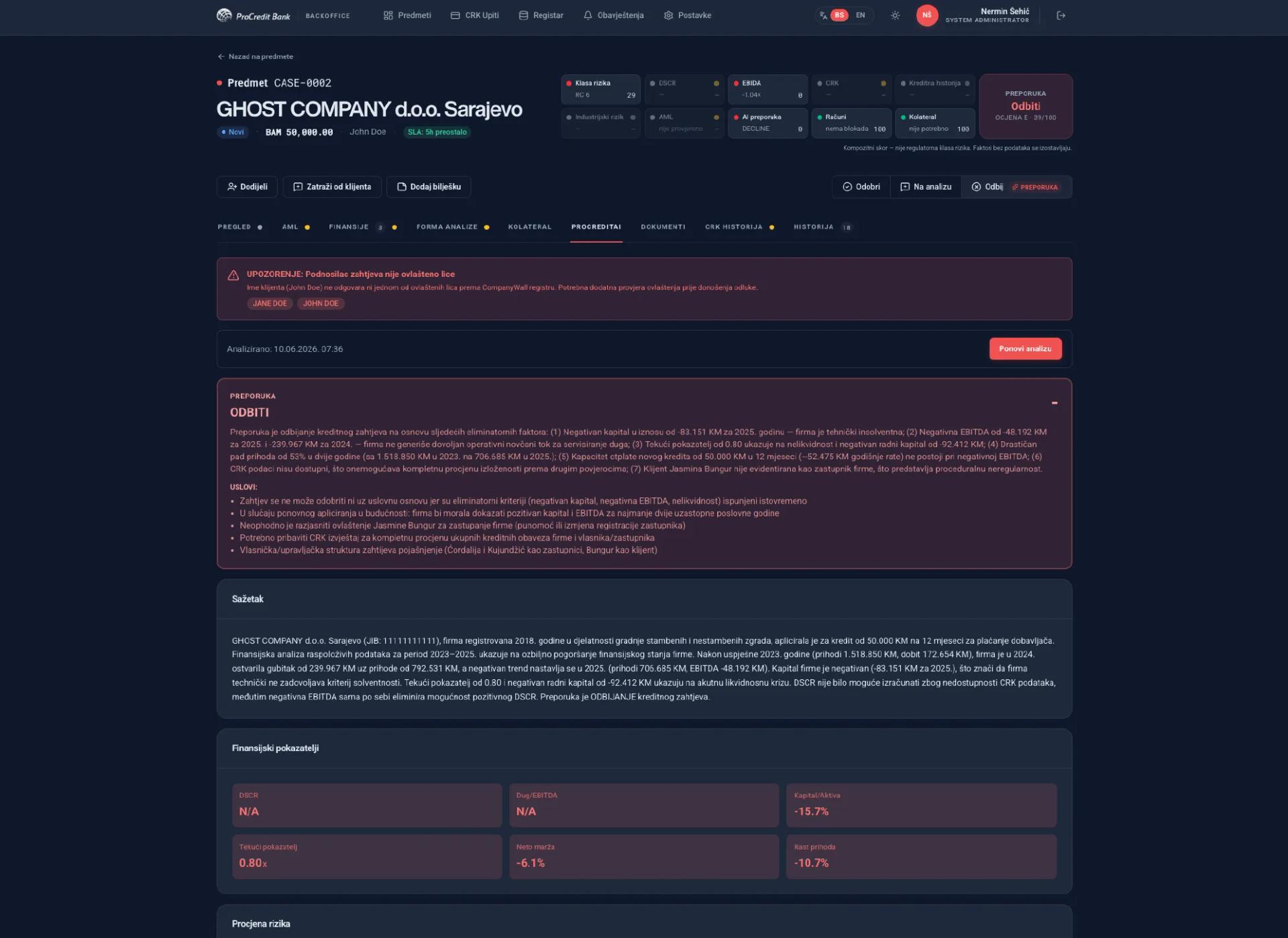
The clearest example in our work is inside a bank. ProCredit did not need a credit platform with every module a vendor could think of. It needed loan decisions that were fast, explainable, and logged, so the committee, the customer, and the regulator could all read the same reasoning. We built that, and only that, into the shape of the bank's own process. Micro-loan decisions that used to take about a week now come back within 24 hours of a complete application. The software has exactly the bank's steps in it. A general product would have had the bank's steps somewhere in a settings menu, next to everyone else's.
Another team at the same bank had its marketing numbers in five tools and could not answer the plain question of what a lead cost them. The fix was one screen, inside the admin panel they already logged into every morning, joined to the data they already owned. No new product to learn. No vendor onboarding call. The screen shows their campaigns, in their language, with their definitions written under each number.
Two startups, Joto in Germany and Meddida in the United States, each needed an iPhone to measure something, a room in one case and a window opening in the other. Nobody built the measurement platform for them. Each got an algorithm written for its app, in native code, and each app stayed its own.
Why this is affordable now
The reason broad software existed was cost. Building anything serious took a large team and years, so the only way to recover the money was to sell the same thing to thousands of customers and let each one adapt. That constraint has mostly gone. A senior engineer with a good model writes the first draft of a module in an afternoon and spends the rest of the week on the parts that matter: the data model, the permissions, the edge cases the client's staff will hit on day two. Work that a vendor had to amortise across a market now pays off for one company.
This is how our Build program works. Six weeks, one workflow, running on the client's real data in the client's environment, measured for accuracy, latency and cost per run. At the end there is a working system and a number, and a decision to scale it, change it, or stop. There is no demo on sample data, because a demo proves nothing about the Tuesday morning when the real file arrives.
AI goes the same way
Coburn's second point is the one we see most clearly. The frontier models are remarkable, and for a lot of enterprise work they are more model than the job needs. The bank's marketing assistant is a good example. It answers in Bosnian, and it answers only through a small set of typed, read-only queries over the bank's own views. It knows the bank's product groups, its campaigns, and its definitions of a lead, and nothing else. It cannot see a customer's name. That narrowness is the feature. The team trusts a number because they can see exactly where it came from.
People sometimes ask us why they should not build this themselves with Claude. Often they should, and we say so. The part worth paying for is rarely the model call. It is the integration with systems that were never designed to be integrated, the audit trail, the permissions, the data at three in the morning, and someone who is accountable when any of that fails. That part is specific to each company by definition, and it is where the value sits.
What to do with this
If you run a team that buys software, the shift changes how you shop. Write down the steps your people take every day before you look at a feature list, and judge a tool by how many of those steps it covers without a workaround. Expect the software to adapt to you, because it can now, and treat a long training programme as a sign that it was built for someone else. Budget for the people who keep it running, since specific software is only as good as the person who answers when it breaks.
Specific software does less and fits better. Companies that have their own will be hard to compete with, and the price of having it has never been lower.